
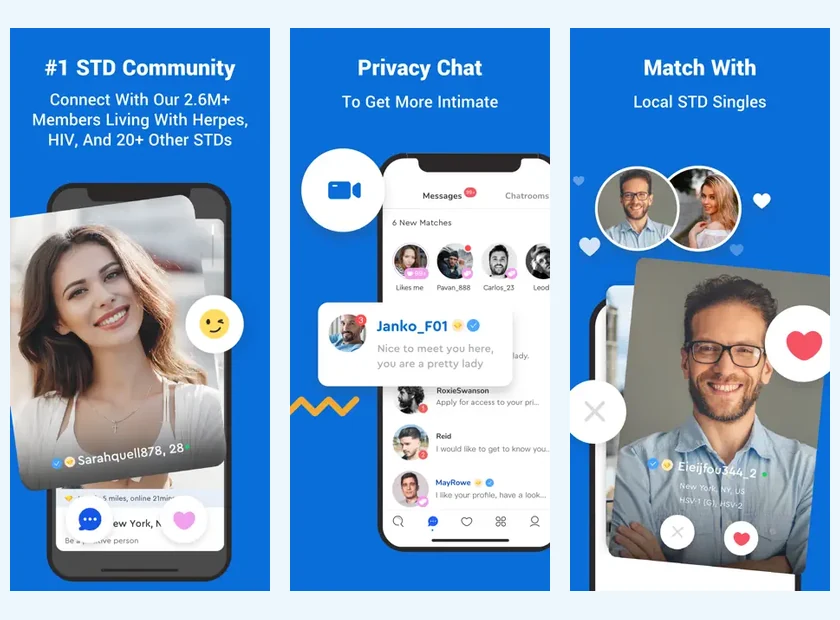
How PositiveSingles Works at the Start
The journey begins with creating an account, then with your profile. The account allows access to the service; the profile helps other members understand who you are and what you are looking for. These two steps do not require the same effort. Filling out a form opens a door for you, while choosing a few personal details gives someone else a reason to start a conversation.
It is helpful to prepare the items separately. Keep an accessible email address for your account and a few simple ideas for your profile: an activity you enjoy, your approach to dating, and broad enough location information to keep you comfortable. The registration page accompanies this preparation without asking you to enter personal data on PositiveSingles.fr.
Give Your Profile a Personal Voice
Your profile should not tell your entire biography. It should allow an initial understanding: do you live in France, in what language do you like to communicate, are you looking for a lasting relationship or do you want to get to know each other gradually? A clear answer to these questions helps more than a string of general qualities like “friendly,” “honest,” or “open.”
A recent photo and a coherent description have complementary roles. The first shows your appearance; the second lets your personality be heard. Avoid compensating for an empty description with a large quantity of photos. If you're talking about cooking, reading or going out, add a detail that gives the other person a natural question to ask.
You can improve this presentation after your first conversations. There is no need to delay your discovery of the service indefinitely to find the ideal phrase. The profile guide suggests a revision method: replace abstract wording with life scenes, then remove what is too intimate or too precise.
Choose a Way to Discover People
The search allows you to examine profiles according to the available filters. Flame, presented in the official FAQ, offers a visual way to browse with a reaction of interest or a move to the next profile. These uses can coexist: a moment of quick discovery can be followed by more attentive reading when someone catches your attention.
The choice of criteria deserves a little flexibility. A very narrow area risks limiting opportunities; a huge area can produce exchanges that you could never extend in real life. Start with a distance or area compatible with your habits, then adjust according to what you discover, without announcing in your profile availability that you do not have.
In France, the regional guides give you pointers for this reflection. They do not represent an inventory of members. Their role is to help you distinguish between a place where you live, a place where you work and a place where you would actually agree to travel to meet someone.
Understand a First Sign of Interest
A wink or reaction can indicate that a profile has gained attention, but does not say everything about the author's intention. Don’t immediately turn a brief signal into proof of attachment. It may be an invitation to discover a profile, a spontaneous gesture or the start of a still very uncertain conversation.
What happens next depends on reciprocity and the possibilities of your account. A sign of interest does not necessarily offer the same rights as a private message. The distinction between free and Premium access is important here: it avoids thinking that a technical impossibility necessarily means a personal refusal.
When you can write, rely on a specific element. A light, open-ended question leaves more room for response than a very intense statement. The goal of the first exchange is simply to find out if you like the way the other person communicates.
Find Out How You Enjoy Talking
The search criteria cannot measure the pleasure of talking together. A conversation allows you to discover a pace, a sense of humour, an ability to ask questions and a way of respecting boundaries. Seek mutual participation rather than a perfect answer. Someone can write briefly but carefully; a long message may, on the contrary, take no account of what you have said.
For example, after a conversation about traveling, you can ask what the person enjoys in a typical day. This transition brings the conversation back to a life you could actually share. It also helps you see whether there is a connection beyond a spectacular subject or a beautiful photograph.
The first message guide helps create this opening. Then let the conversation evolve. It is not necessary to follow questions like in an interview: also share an idea, a short anecdote or a personal preference that gives the other person something to bounce back from.
Keep Community and Dating Expectations Clear
PositiveSingles presents both dating features and community spaces. Reading or participating in a collective exchange can help you feel less isolated, while a personal conversation allows you to discover a particular affinity. These experiences can complement each other without every community interaction becoming a romantic invitation.
Respect the context in which you meet someone. A person who shares a difficulty does not necessarily invite you to contact them with romantic intent. Conversely, a profile clearly geared towards meetings can allow you to speak more directly about your expectations. Paying attention to the setting makes the conversations more pleasant for everyone.
Also choose what you expect from your own presence. You may want to read first, respond later, and consider dating later. This progress is not a failure. It simply becomes easier to live with if you don't compare yourself to a supposedly normal rhythm.
Move Toward a Date You Both Want
A face-to-face meeting is prepared when the desire is mutual. Offer a public place, a reasonable duration and an easy way to leave. A coffee or a walk in a busy place can allow enough space to talk without feeling like an all-evening commitment.
Specify the location and time, then check that the trip is suitable for both people. A vague invitation can create more tension than a modest but clear proposal. Keep your own means of return and do not consider the effort of traveling as an emotional or physical debt.
Our page dedicated to first meeting expands on these choices. The goal is to extend a conversation in a setting where everyone can remain themselves, even if the attraction is ultimately not mutual.
Adjust Your Experience Without Judging Yourself
After a few sessions, see what works for you. Did you choose too large an area? Does your profile express your intention? Do you write when you actually have time to respond? These adjustments relate to how you use the service, not your value as a person.
Paid features may meet a specific need, but they are no substitute for availability or attention. Before changing your subscription, identify the problem you want to resolve. If you prefer to use your phone, the app page will direct you to the correct download. If you want more clarity on your budget, start with prices.
A satisfying experience doesn't require staying connected all day. Above all, it requires a sincere profile, realistic expectations and enough presence to recognize a conversation worth continuing.
Try One Complete Conversation
A useful first session has a modest goal: find one profile with something you genuinely want to ask about. Read the whole profile, decide whether your locations and relationship intentions seem compatible, and use a communication option available to your account. If you receive a reply, answer its content before opening another topic. This gives you a better understanding of how the service fits your dating life than rapidly trying every feature. You can adjust your search afterwards based on what you learned.
Product sources: PositiveSingles Help